A breaker that trips once a week is not a nuisance. It is a circuit telling you something specific.
Electrical faults announce themselves before they become serious. The problem is that the early signals are inconvenient rather than alarming, so the response is usually to reset the breaker and move on.
Signals worth acting on
- Repeated tripping on the same circuit, particularly under a predictable load.
- Warm or discoloured sockets, switch plates or breaker faces.
- A burning or fishy smell near a distribution board — often the first sign of overheating insulation.
- Lights dimming when a large load starts, suggesting an undersized or loose supply connection.
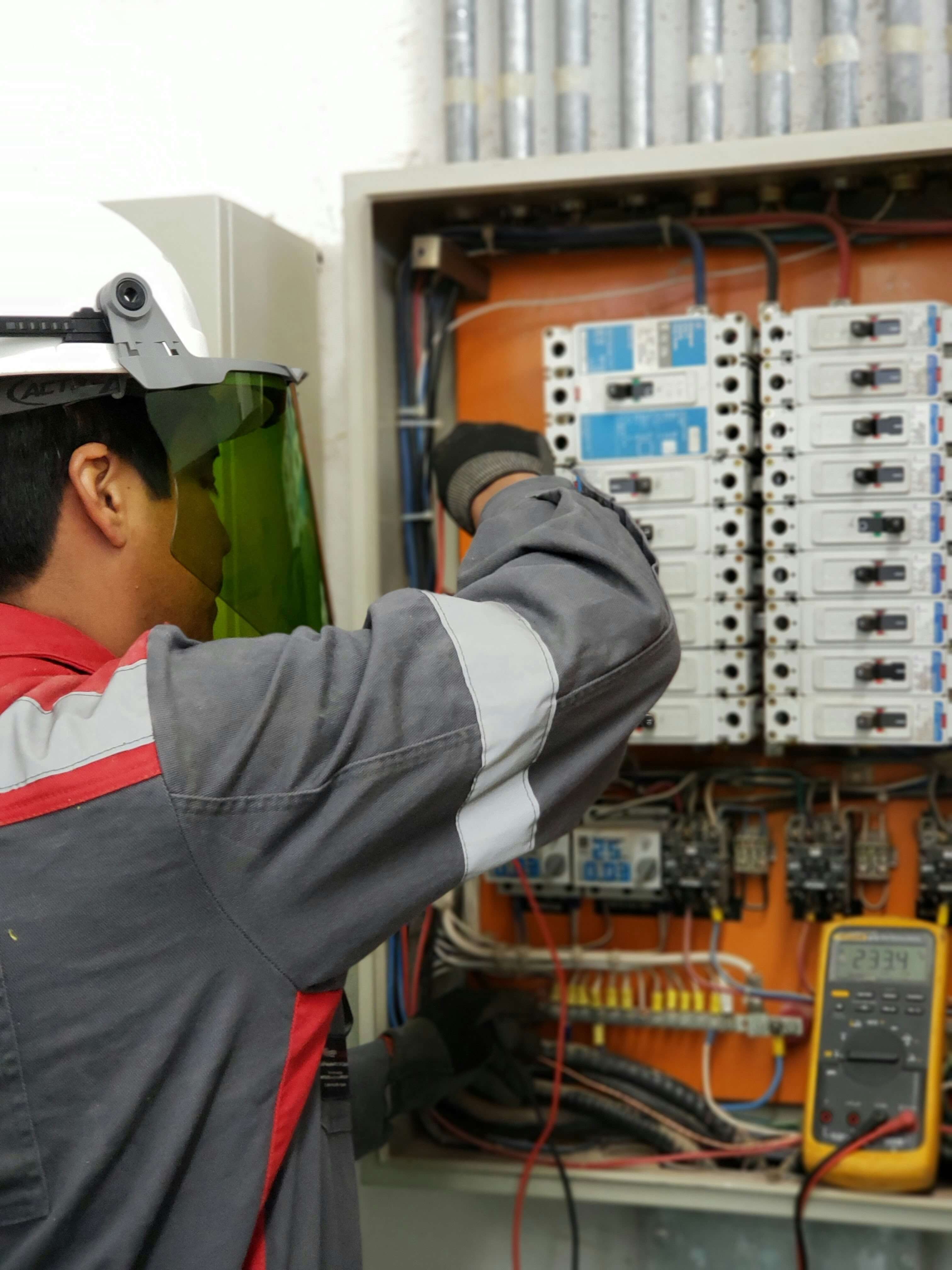
- Visible scorching, corrosion or moisture inside a panel.
The load has usually changed
Most commercial buildings carry far more load than they were designed for. Additional workstations, extra air conditioning, kitchen equipment and server racks are added over the years without anyone revisiting the distribution design. The wiring did not degrade — the demand grew past it.
A reasonable inspection interval
For an occupied commercial property, a documented electrical inspection twice a year is a sensible baseline: board inspection, load check, termination tightening and earthing verification. Facilities with heavy equipment or continuous operation should look at this quarterly. Each inspection should end with a written record — the value comes from comparing one visit to the next.